
Short Observations: Are Companies Becoming Temporary?
Creative destruction on caffeine

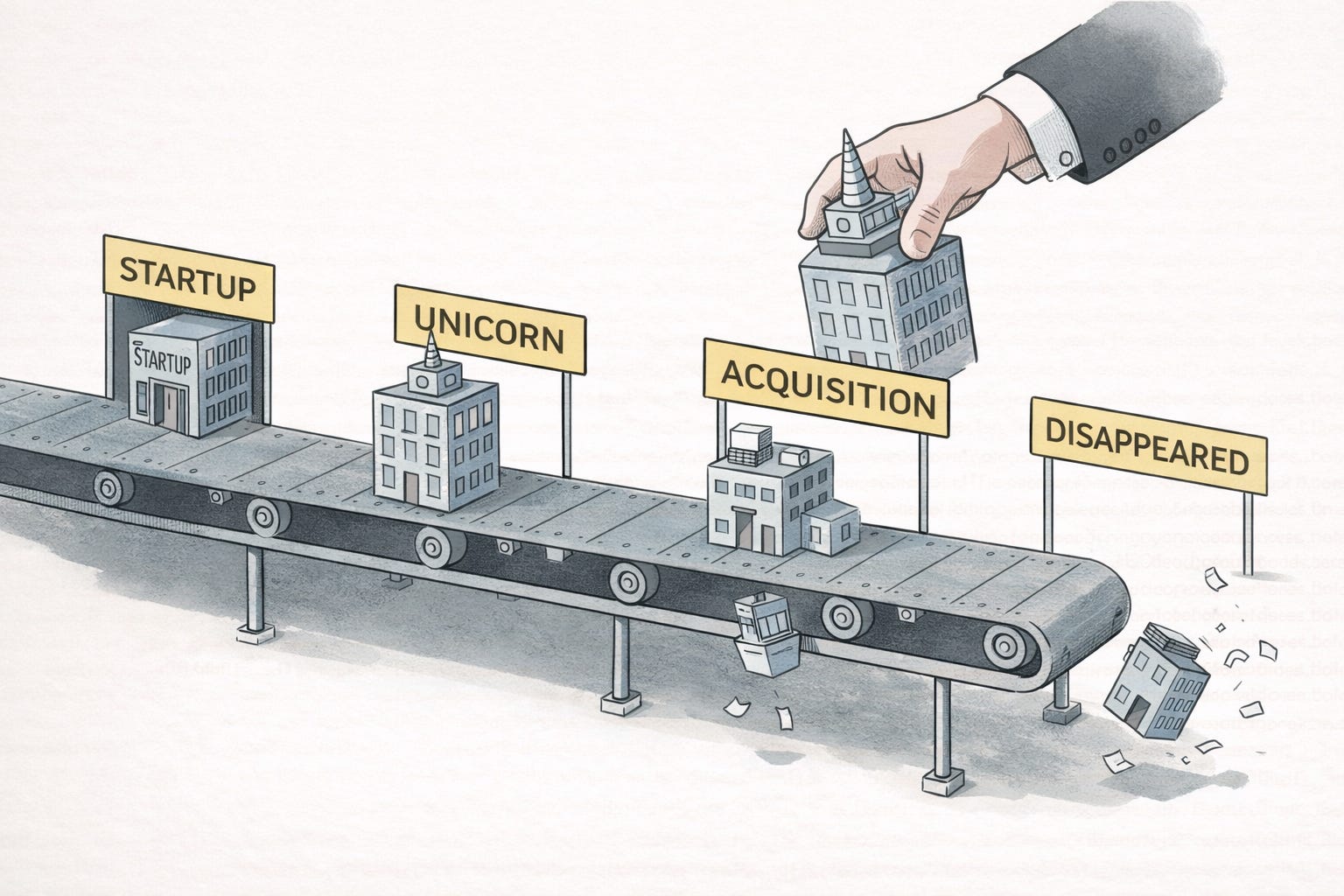
Is it just me, or are companies appearing and disappearing in front of our eyes?
The data suggests it isn’t just me. Back in 1958, the average company stayed in the S&P 500 for about 61 years. Today, it’s closer to 15.
Which means the lifespan of the world’s largest companies has fallen by roughly 75% within a single lifetime.
Creative destruction has always been part of capitalism.
But it seems to be drinking a lot more coffee lately.
Companies Used to Stick Around a Bit Longer
I remember when companies used to stick around for decades (yes, I’m that old).
Now new startups appear and disappear faster than my inbox fills up on a Monday morning.
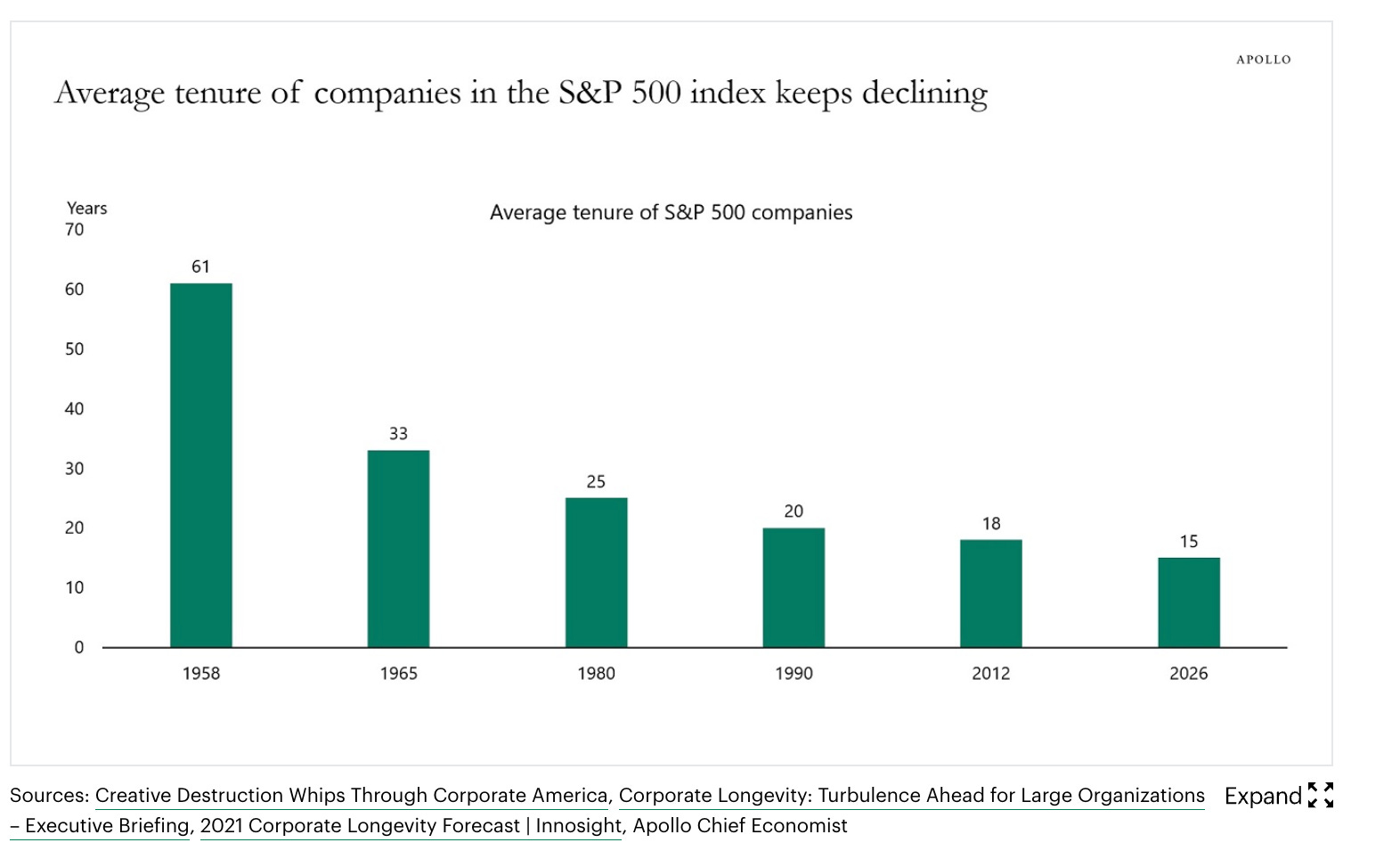
Numbers like this always make me curious.
Being me, I start wondering what sits behind them and perhaps more importantly, what we might not be seeing.
Because when I think about it, several things may be happening at once.
Buyouts as a Defence Mechanism
One thought is whether buyouts are increasingly becoming a defensive strategy.
Large companies have always acquired smaller ones.
But as innovation accelerates, it sometimes feels like incumbents are buying potential threats before they become real ones.
If a new entrant could disrupt your business in five years, buying them today might start to look like a very sensible insurance policy.
Possibly the corporate version of “keep your friends close and your disruptors closer.”
Technology May Create — and Destroy — Faster
Then there is the speed of technology itself.
Technology now allows companies to scale faster than ever before.
But the same forces that help companies grow quickly may also help competitors replace them just as quickly.
In some industries, it almost feels as though companies are being created and disrupted within the same technological cycle.
Which is impressive, and slightly terrifying if you’re the company being disrupted
The Faster Journey to Utility
Then there is the lifecycle of products themselves. Innovation used to take years to spread across markets, but today adoption can happen incredibly quickly.
And once something becomes widely adopted, commoditisation usually follows not long after, which makes me wonder whether products are simply becoming utilities faster than they once did.
In other words, yesterday’s breakthrough quickly becomes today’s expectation.
And tomorrow… it’s just another feature people expect to be free.
Individuals as Companies of One
Another shift that fascinates me is the growing capability of individuals. Technology increasingly allows individuals to operate with tools and capabilities that once required entire organisations.
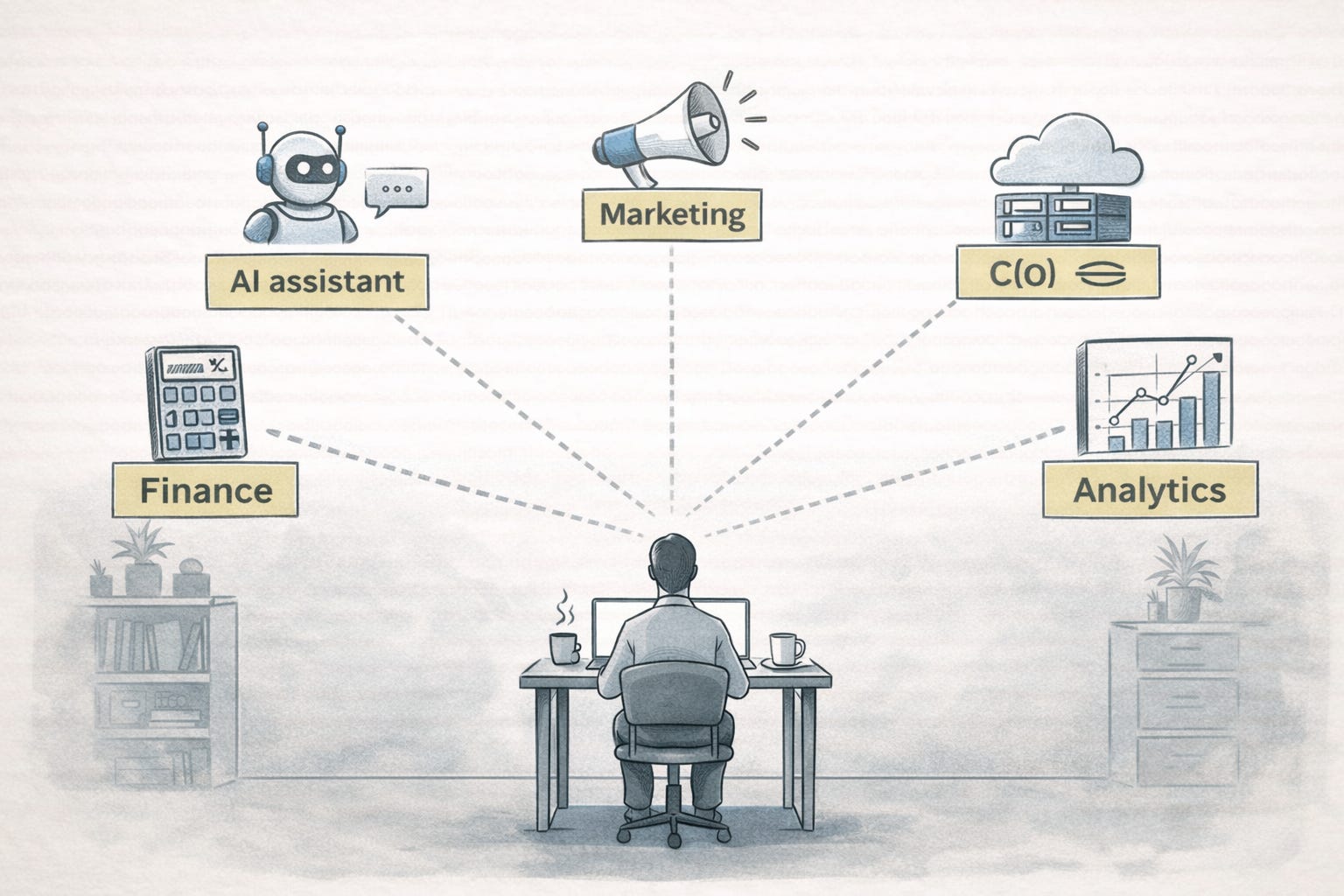
Software, platforms, and intelligent systems can now amplify a single person’s productivity dramatically, which raises the possibility that more individuals could start operating as companies of one.
That would have sounded unusual twenty years ago. Back then you needed an office, a team, and a fax machine.
Today you mostly need Wi-Fi and a decent coffee supply, which makes the idea of individuals running micro-enterprises feel far less radical than it once did.
In fact, it almost feels inevitable.
The Paradox Ahead
Which leads to a rather interesting paradox.
Technology may create more companies than ever, while also making them shorter-lived than ever.
The economy might begin to look far more fluid, with firms constantly forming and dissolving, collaboration networks shifting, and individuals increasingly operating as micro-enterprises.
Almost like economic particles forming and dissolving.
A Final Thought
Looking at the trend, I can’t help wondering where it leads. If the lifespan of companies has already fallen from 61 years to around 15, it doesn’t seem unreasonable to imagine that number drifting into single digits.
At that point, companies may start to look less like permanent institutions and more like temporary structures, something that forms, grows, and disappears again, almost like economic pop-up shops.
Which makes me wonder where we should really be investing our money.
But perhaps the more interesting question sits closer to home. If the companies we work for may not last decades anymore, where should we be investing our careers?
Because in an economy moving this fast, the most durable asset may no longer be the company, it may be you.