
Short Observations: The Lesson Energy Crises Keep Teaching
A vulnerability hiding in plain sight

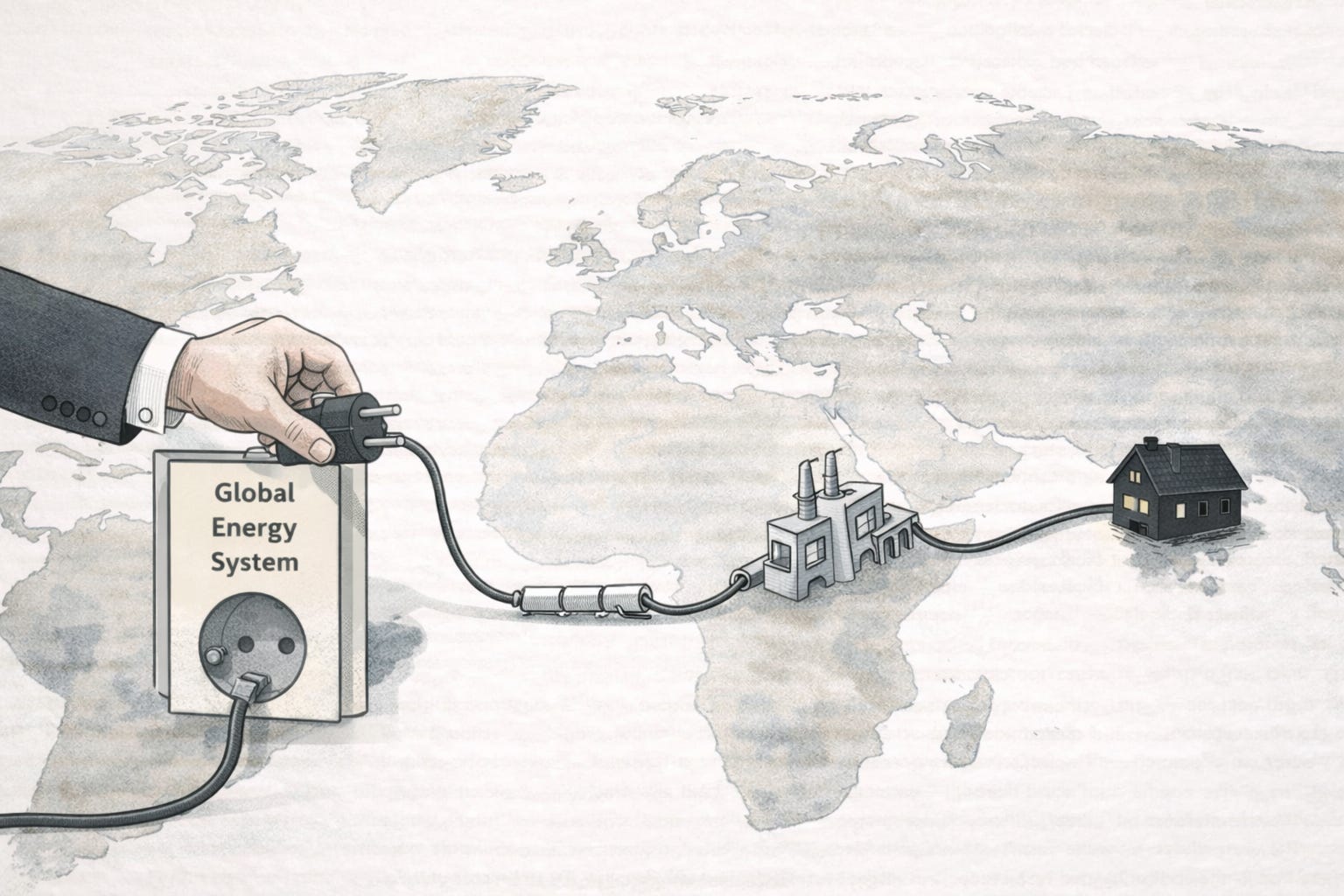
Reading the headlines this morning, the sequence felt strangely familiar.
Oil spikes because of conflict in the Middle East. Petrol prices rising. Energy bills expected to follow. Inflation potentially back on the table.
By now the sequence feels almost routine.
Which made me wonder whether we might be missing something slightly obvious.
For years the energy transition has mostly been framed as a climate conversation. But moments like this make me suspect it might also be something else.
A diversification strategy.
When Energy Becomes a Global Domino
Stick with me here, as this may start sounding a bit like an investment seminar. I promise it leads somewhere.
Energy markets have an interesting property. When something goes wrong somewhere, it rarely stays there. Within days the consequences travel a very long way.
Petrol stations update their prices, energy bills start drifting upward, and economists begin mentioning inflation again.
Which is quite impressive when you think about it.
A geopolitical event thousands of miles away eventually shows up in someone’s weekly grocery budget.
Globalisation at work… just perhaps not the version anyone originally had in mind when the concept first sounded so appealing.
A Pattern That Keeps Repeating
All this feels like a familiar story.
The oil crisis in the 1970s, Gulf conflicts, Russia and Ukraine, and now tensions around the Strait of Hormuz again. Different decades and different conflicts, but the same economic ripple effect appears every time.
Which raises a slightly uncomfortable thought.
If the same vulnerability keeps appearing over and over again, perhaps the real issue isn’t the events themselves. It might be how we are reacting to them.
Economists tend to call this a pattern.
The Slow Energy Shift
What’s interesting is that the world has been aware of this vulnerability for quite some time.
Energy markets have always been tied to geography, shipping routes and political stability. Yet the transition away from fossil fuels has moved… patiently.
Which is understandable.
Energy systems are enormous, complicated and extremely expensive to rebuild. Pipelines, refineries and power grids tend not to be replaced overnight.
Although during an oil price spike that sometimes sounds like an excellent idea.
Still, every time prices jump because of geopolitical tension, the same structural weakness quietly reveals itself again.
Not just environmental.
Economic
Thinking About Energy Like a Portfolio
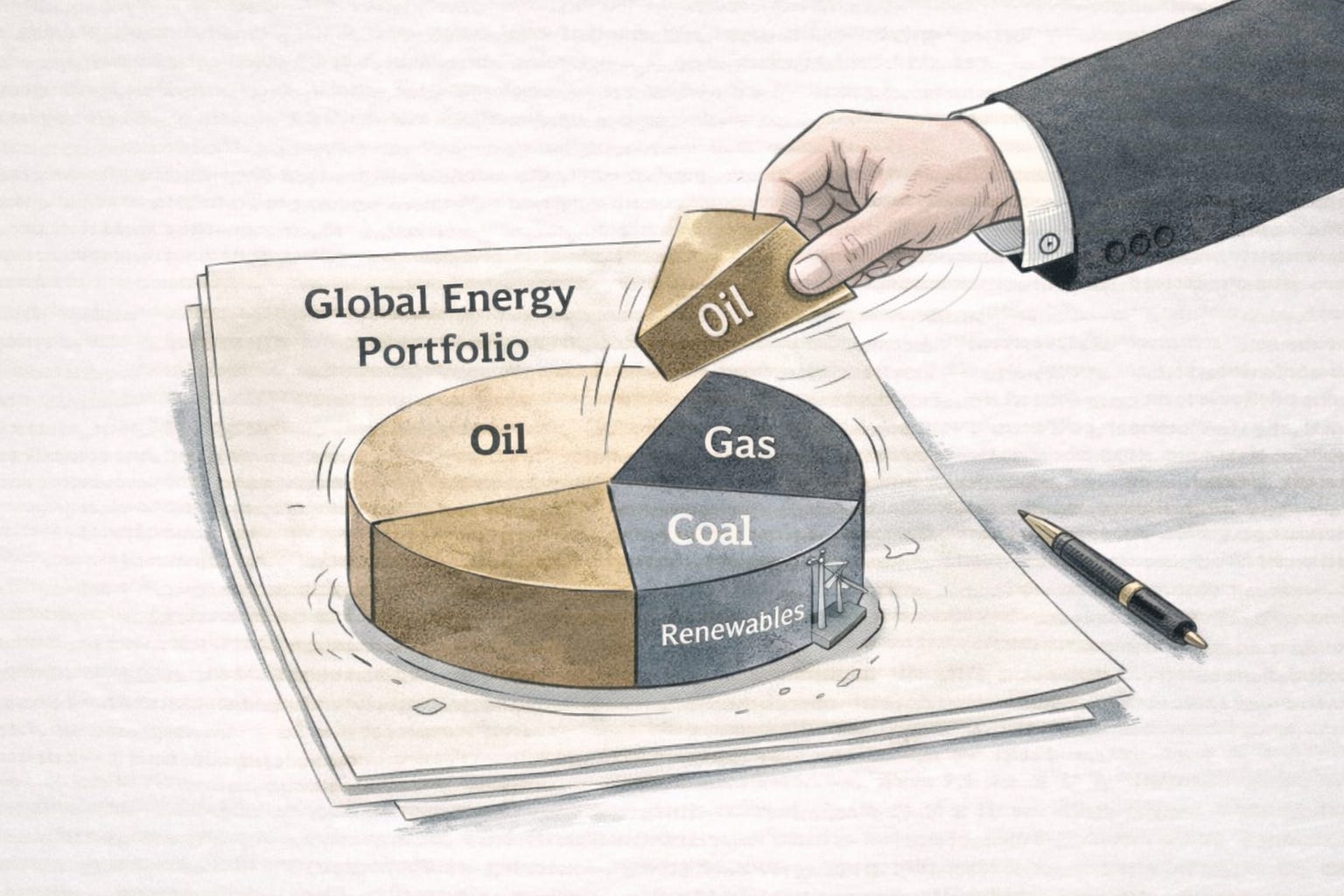
This is where I start thinking about energy a little like an investment portfolio.
Most investors try to avoid concentration risk. Putting everything into one asset tends to make people nervous.
Yet large parts of the global economy still depend heavily on fuels that come from a relatively small number of regions and travel through a few critical shipping routes.
Which means the system is incredibly efficient when everything works… and slightly dramatic when it doesn’t.
Energy markets, as it turns out, can occasionally enjoy a bit of drama.
Changing the Geography of Energy
Renewables introduce an interesting twist to this story.
Solar panels don’t travel through the Strait of Hormuz. Wind turbines aren’t affected by tanker insurance premiums.
They don’t remove energy risk entirely. But they do change the geography of it.
Energy becomes something generated locally rather than shipped across oceans, which tends to make systems a little more stable. It also removes the slightly awkward situation where a geopolitical event on another continent ends up adjusting your electricity bill.
Which is normally not how most people expect geopolitics to appear in their household budget.
Maybe This Was Never Only About Climate
So perhaps the energy transition has been framed a little too narrowly.
Not just climate policy. Not just environmental policy.
But economic resilience.
Because if the same geopolitical events repeatedly translate into household bills and inflation spikes, the real question may not only be about emissions.
It might also be about exposure
A Final Thought
Moments like this always make me wonder how future historians might describe the period we’re living through.
They might say the early twenty-first century was the moment when the world realised its energy system was a little too concentrated, and began slowly, sometimes reluctantly, to diversify it.
Energy transitions take decades.
But occasionally a headline reminds you why they tend to happen at all.